
Cinema is built on storytelling. Dialogue, sound design, and music all shape how a story is understood and experienced.
But for many visitors, that experience is not always complete.
For people with hearing loss, missing dialogue or struggling to follow audio can make it difficult to stay connected to the film. Important moments are lost, and the overall experience becomes less immersive.
Accessible audio is no longer optional. It is part of delivering a complete cinema experience.
What challenges do cinemas face with accessible audio?
Traditional assistive listening systems can be limited in coverage, usability, or flexibility.
Common challenges include:
- Inconsistent audio clarity across the auditorium
- Limited availability or awareness of receivers
- Systems that are difficult to manage or maintain
- Solutions that feel separate from the main cinema experience
These barriers can prevent visitors from fully engaging with the film, even when assistive listening is available.
What do Auri™ and Auracast™ bring to cinemas?
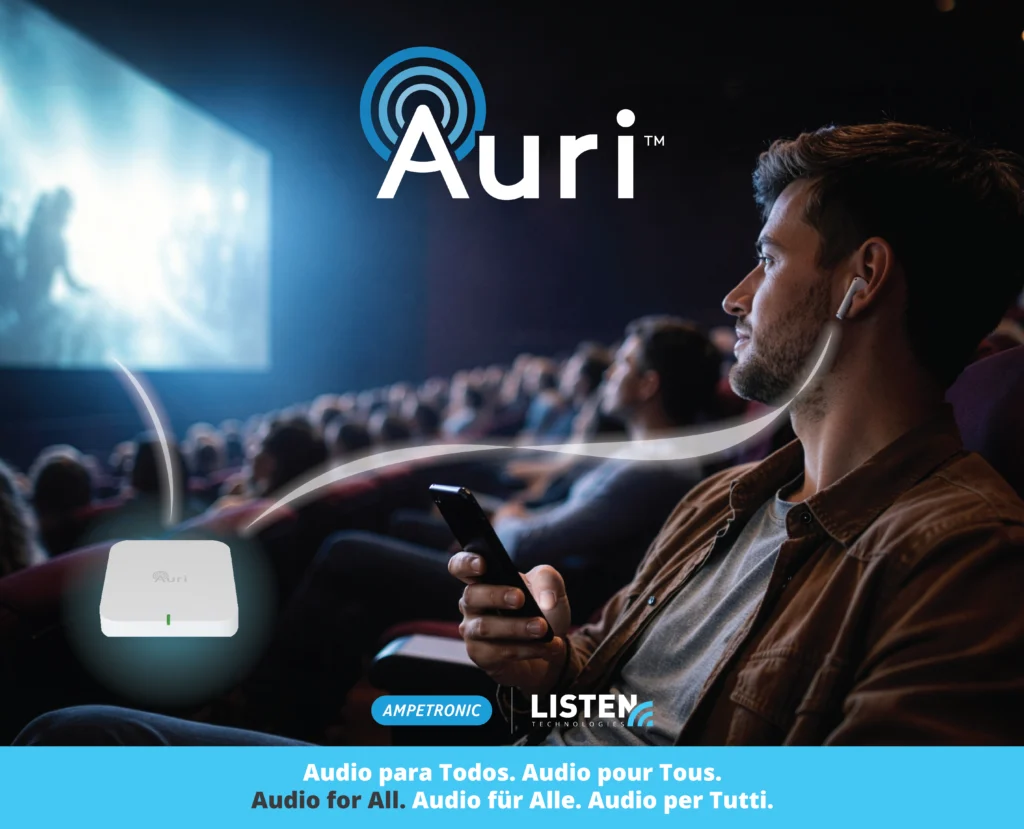
Auri™ introduces Auracast™ broadcast audio into the cinema environment, enabling audio to be delivered directly to listeners.
Instead of relying only on loudspeakers, cinemas can provide:
- Direct audio streaming to compatible personal devices
- Support for venue-provided receivers
- Consistent audio access throughout the auditorium
This allows visitors to hear dialogue more clearly and follow the story from beginning to end.
How does Auri™ improve the cinema experience for visitors?
Auri™ focuses on one outcome: helping people hear every moment.
This includes:
- Clearer dialogue, even in complex sound environments
- Improved understanding of key plot points and subtle cues
- A more immersive and inclusive experience
Some of the most important moments in film are quiet. A whispered line, a subtle interaction, a small detail that changes the story.
Auri™ helps ensure those moments are not missed.
How does Auri™ fit into existing cinema infrastructure?
Accessible audio should not add operational complexity.
Auri™ is designed to integrate into existing cinema systems, making it straightforward to deploy and manage.
It supports:
- Integration with current AV systems
- Flexible deployment across different auditorium sizes
- Use alongside both personal and venue devices
This allows cinemas to enhance accessibility without disrupting their current setup.
Is Auracast™ ready for cinema environments today?
Auracast™ broadcast audio is beginning to be adopted in public and shared audio environments.
For cinemas, this means:
- A future-ready approach to assistive listening
- Compatibility with a growing number of personal devices
- A scalable solution that evolves as device adoption increases
Auri™ enables cinemas to adopt this technology now in a way that works in real-world environments.
Why does accessible audio matter in cinemas?
Cinema is a shared experience.
When audio is not accessible, part of that experience is lost.
Providing clear, accessible audio means:
- More visitors can enjoy films as intended
- Accessibility becomes part of the standard experience
- Audiences can engage, react, and share the moment together
It is not just about compliance. It is about delivering a complete experience.
Is Auracast™ only for people with hearing loss?
No, and that is one of its key advantages.
While Auracast™ broadcast audio improves accessibility for people with hearing loss, it is not limited to that use case.
In a cinema environment, it can also support:
- Visitors who prefer clearer or more direct audio
- Non-native speakers who benefit from improved dialogue clarity
- Guests in challenging listening positions within the auditorium
- Anyone who wants a more personalised listening experience
By allowing audio to be streamed directly to personal devices or dedicated receivers, Auracast™ expands how audiences can engage with sound not just who can access it.
This approach helps shift accessible audio from a specialist feature to part of the overall cinema experience.
With Auri™, cinemas can support inclusive listening while also offering greater flexibility and choice to all visitors.