

Designing audio systems for public and professional spaces now requires accessibility to be treated as a core requirement rather than a late-stage addition. For consultants, specifiers, and AV professionals, early design decisions can determine whether a space delivers genuinely inclusive listening experiences or creates avoidable barriers.
At Ampetronic | Listen Technologies, inclusive audio is approached as a long-term strategy rather than a single product decision. Drawing on more than six decades of assistive listening system development alongside emerging broadcast audio technologies, three considerations consistently shape successful inclusive audio environments: device compatibility, long-term accessibility standards, and the relationship between new and established systems.
Addressing these areas early reduces retrofit risk, supports compliance, and ensures solutions remain usable as technology and user behaviour evolve.
1. Device compatibility and user access
One of the most practical questions in inclusive audio design is how people will actually receive sound.
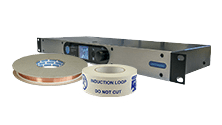
Traditional assistive listening systems have taken different approaches. Hearing loop systems allow individuals with telecoil-equipped hearing aids or cochlear implants to receive audio directly, without borrowing additional equipment. Other systems, such as infrared or RF, rely on venue-provided receivers, each with operational and maintenance considerations.
More recently, broadcast-based technologies such as Auracast™ have been developed to deliver audio directly to compatible personal devices, including supported hearing aids, earbuds, and smartphones. This approach can reduce reliance on shared receivers and support more discreet listening experiences for users who already carry compatible devices.
However, device compatibility varies by technology and by user equipment. Adoption of new broadcast standards is progressing, but not all users or environments can rely solely on personal device access at this stage.
For this reason, early design decisions should consider:
- Which devices users are likely to rely on
- Whether personal device listening is primary, optional, or supplementary
- How users without compatible devices will continue to be supported
Inclusive design is not simply about deploying a technology. It is about understanding the real-world device landscape of the people using the space.
2. Long-term accessibility standards and established practice
Inclusive audio design is closely linked to accessibility standards and established best practice. Hearing loops remain widely recognised and adopted across public, education, corporate, and worship environments. Their continued presence reflects both regulatory expectations and user familiarity.
With over 60 years of combined experience in Assistive Listening design and deployment, Ampetronic and Listen Technologies have seen that their strength lies in predictability, simplicity, and direct integration with telecoil-equipped hearing aids. In many regions, they are embedded within accessibility guidance and building standards.
At the same time, accessibility is not static. Device ecosystems change. User expectations evolve. New transmission methods emerge. This creates an important responsibility: inclusive systems must be capable of adapting without requiring the removal of compliant infrastructure that continues to serve users effectively.
When designing inclusive audio systems, it is therefore important to consider:
- Whether the solution aligns with current accessibility expectations
- How well it supports established assistive listening practice
- Whether it allows for future expansion without compromising existing compliance
Future-ready design does not mean replacing what works. It means building on it responsibly.
3. How new technologies complement existing systems
A recurring question in inclusive audio discussions is whether emerging technologies are intended to replace established assistive listening systems.
In practice, they do not need to be mutually exclusive.
Auracast™ broadcast audio enables transmission of sound to compatible personal devices. Hearing loops continue to provide reliable, direct access for telecoil users, particularly in environments where device compatibility, security, or operational simplicity are critical.
At Ampetronic | Listen Technologies, this complementary approach informs system strategy. Auri™, our Auracast™ broadcast audio solution, is designed to sit alongside compliant hearing loop infrastructure rather than displace it. The objective is layered accessibility: supporting personal device listening where available, while maintaining dependable access for telecoil users and those without compatible devices.
Certain applications, such as service counters, secure environments, and defined listening spaces are well served by hearing loops, while broader or more dynamic settings may benefit from broadcast audio as device compatibility increases.
This reinforces an important design principle: inclusive audio strategies do not need to be either-or decisions. They can be layered, allowing venues to support multiple access methods in parallel.
Designing with this in mind helps ensure that:
- Existing assistive listening investments remain usable
- New technologies can be introduced without disruption
- Different user needs are addressed simultaneously
Bringing the considerations together
At Ampetronic | Listen Technologies, inclusive audio is defined by deliberate system design rather than individual technologies.
Across worship spaces, corporate environments, education, and public venues, experience shows that accessibility must balance continuity with innovation. Established assistive listening systems provide dependable, standards-aligned access. Broadcast technologies such as Auri™ expand listening possibilities for compatible personal devices. Together, they form a resilient and adaptable strategy.
By addressing device compatibility, regulatory expectations, and system complementarity early in the design process, consultants and integrators can reduce risk, protect investment, and deliver listening environments that remain inclusive over time.
The future of inclusive audio will belong to solutions that respect established access while enabling new possibilities.